Transport managers in grocery, bus and logistics
We don't have enough power to charge our trucks.
Fully charged trucks every morning, on the grid you already have. The battery charges slowly all day and gives the chargers full power when the vehicles come in.
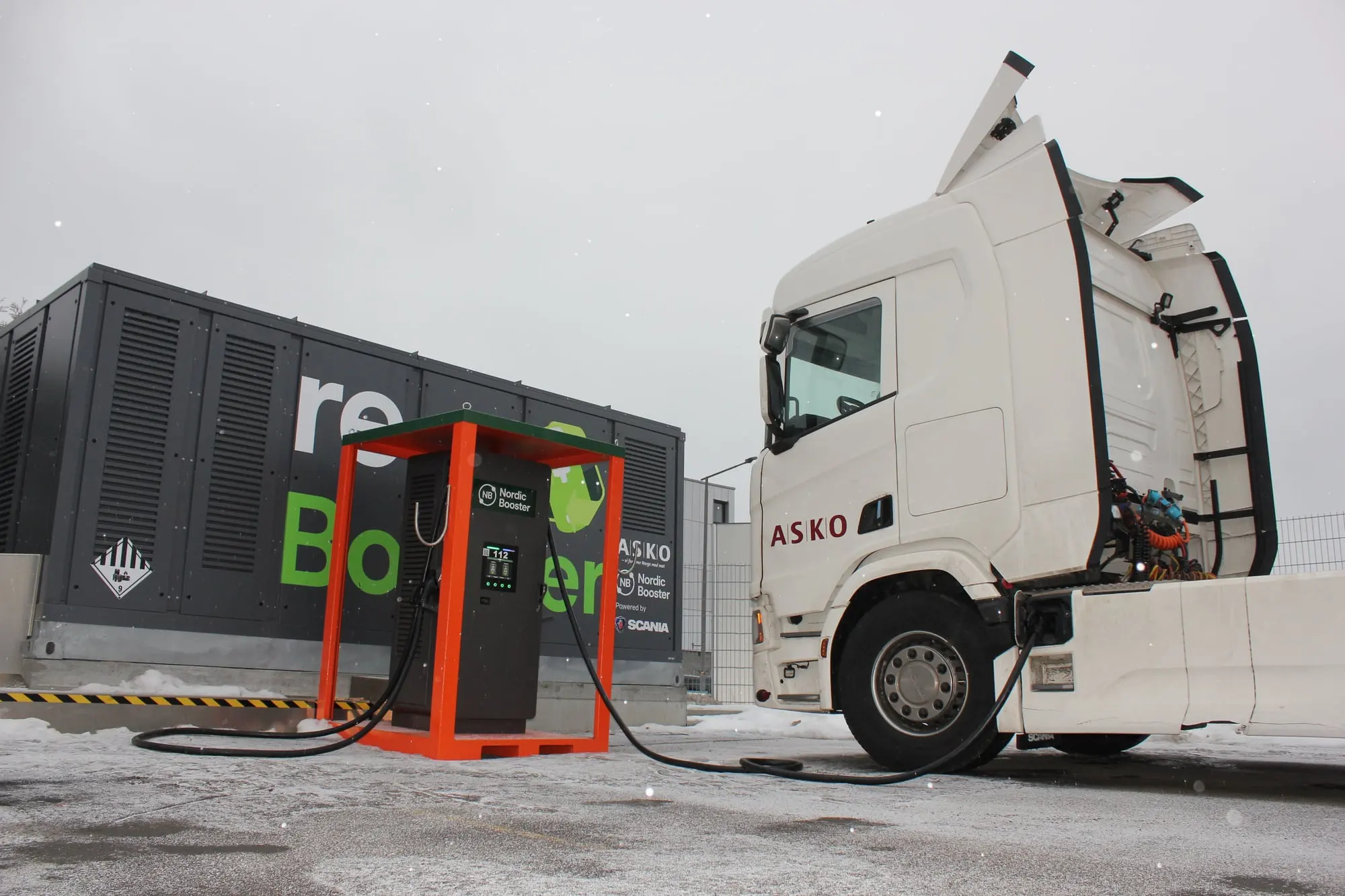
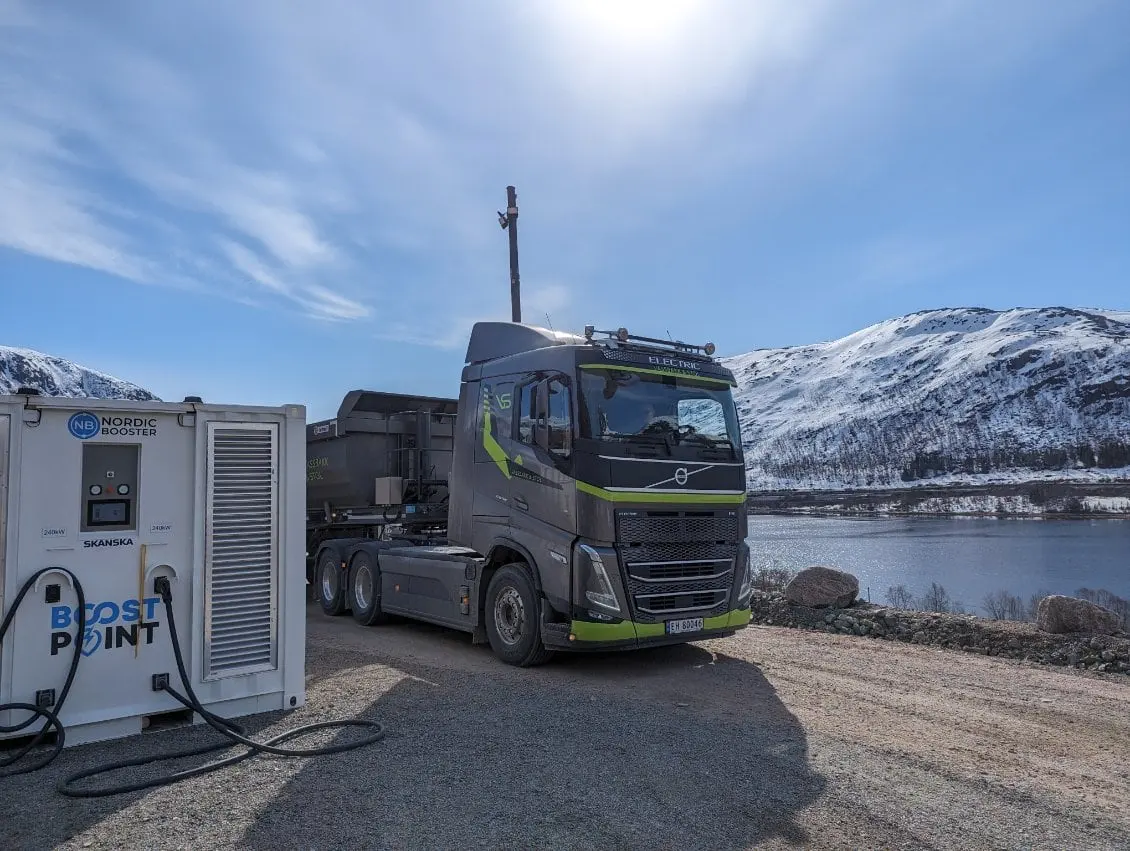
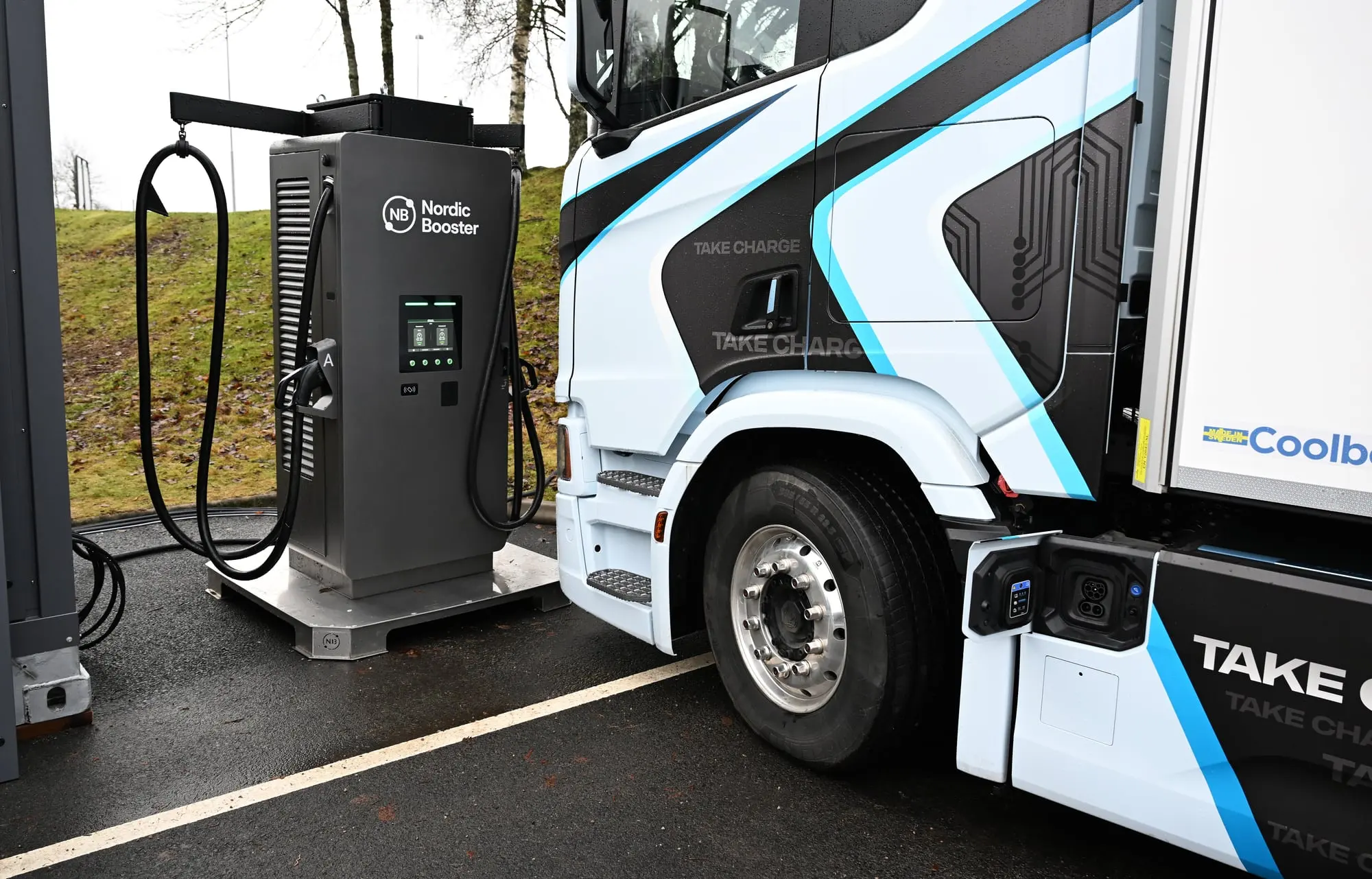
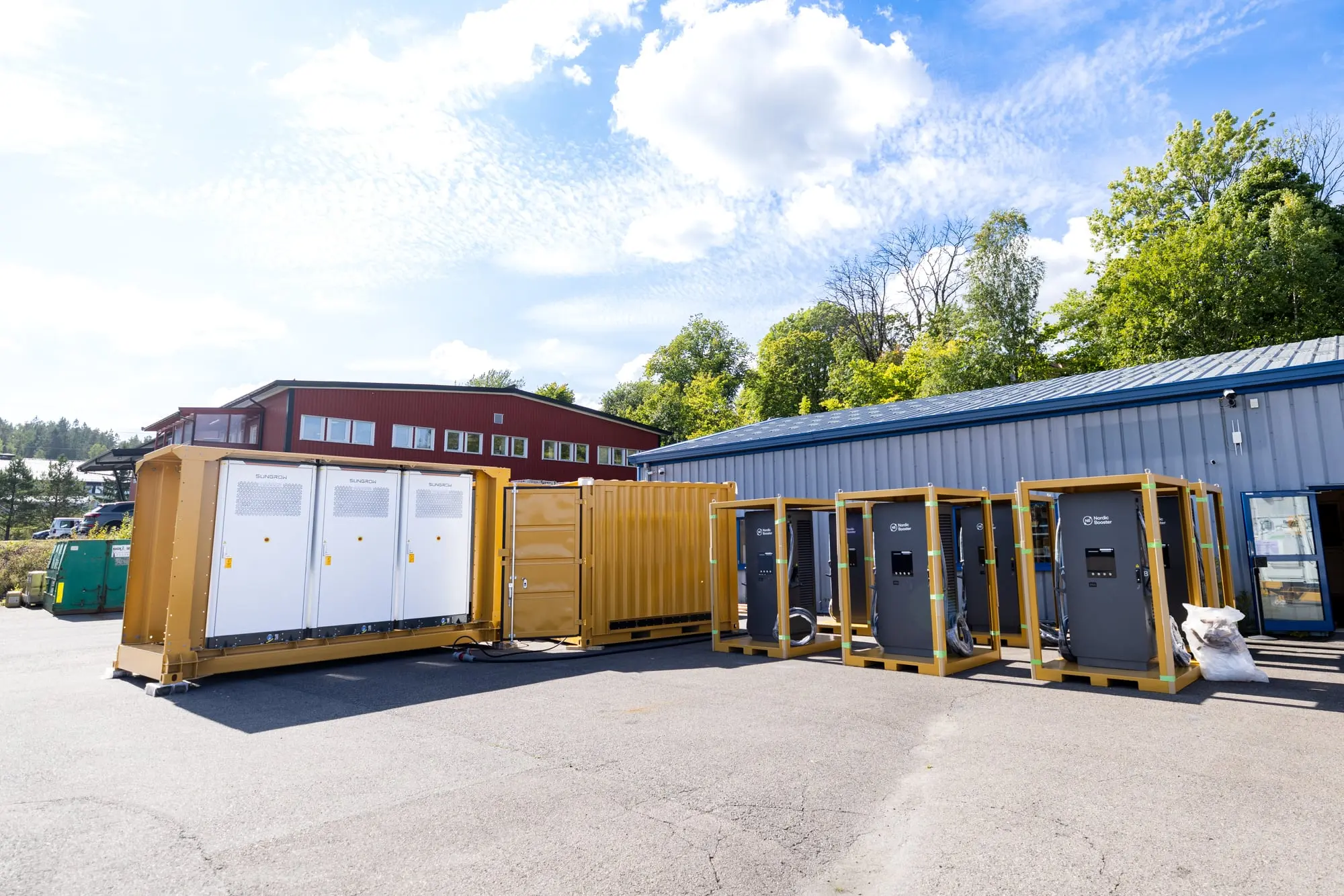
Full charging power today.
We deliver the whole solution: chargers, battery and control. You don't have to wait for the grid to be upgraded.
More charging power than the grid gives.
Vehicles charge in short, high peaks. The battery takes them, and your draw from the grid stays flat at the limit.
At NorCharge in Rommen, the battery takes the peaks from around 600 kW down to 100 kW. Energy management sets the limit itself, based on the load over the last few weeks.
Night and day
The battery fills slowly.
The chargers are idle. The battery charges from the grid connection you have, without creating a new peak.
Shift change
Everyone plugs in at once.
The battery and the grid deliver together. The chargers get full power.
Afterwards
Ready for the next shift.
The battery fills up again before the next shift, and your draw stays below the limit the whole time.
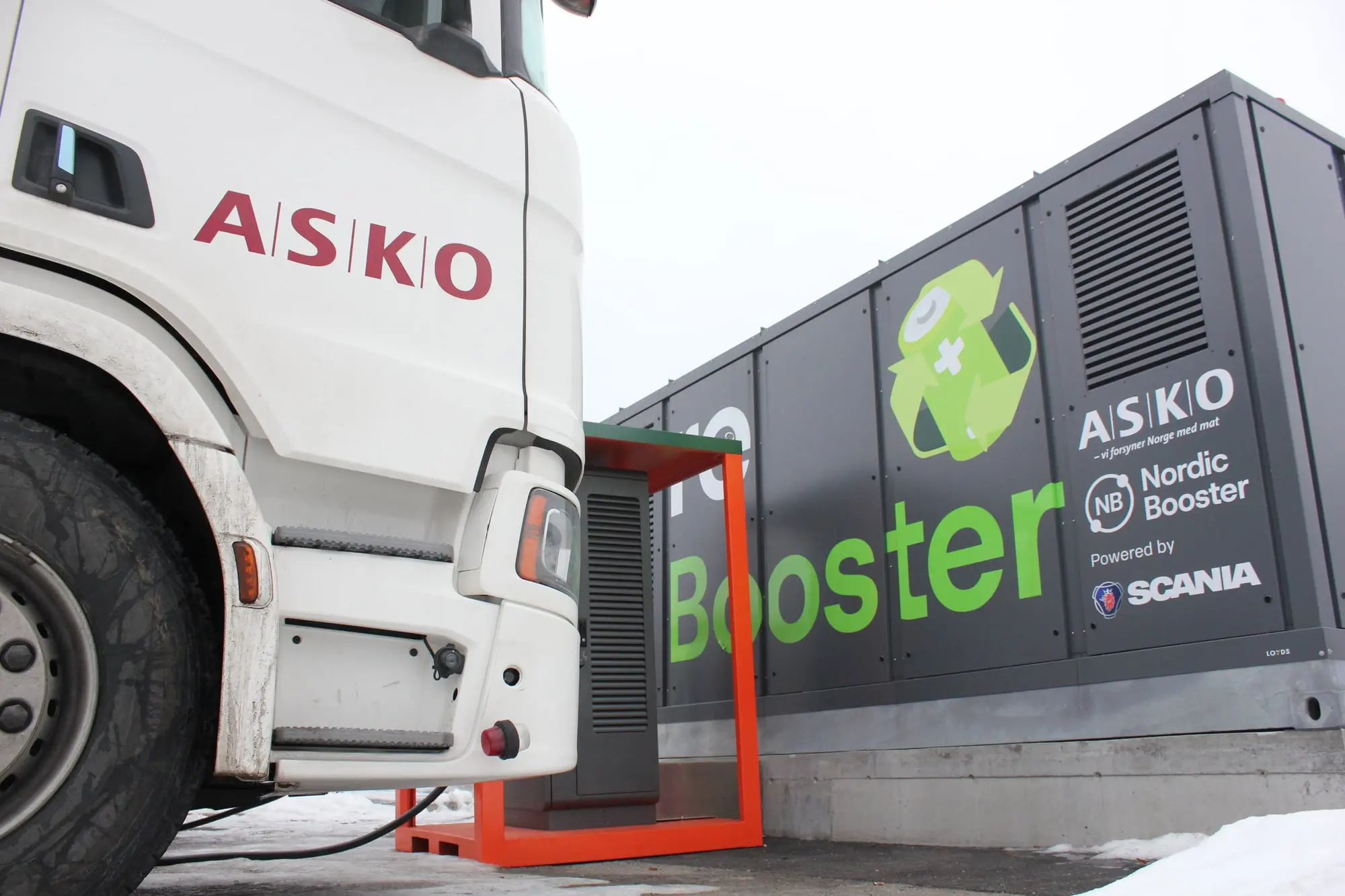
ASKO: more electric trucks, same grid.
ASKO was using all the power the grid gave them. Then they ordered more electric trucks, and needed faster chargers.
We set up two new fast chargers and a reBooster battery, built from used Scania battery packs. The battery supports all the chargers at the depot. ASKO got 800 kW more charging, but pays grid fees as if they had added 100 kW.
Calculated from the peaks the battery has taken each month in 2026, around 550 kW on average, and Elvia's demand charge from July 2026.
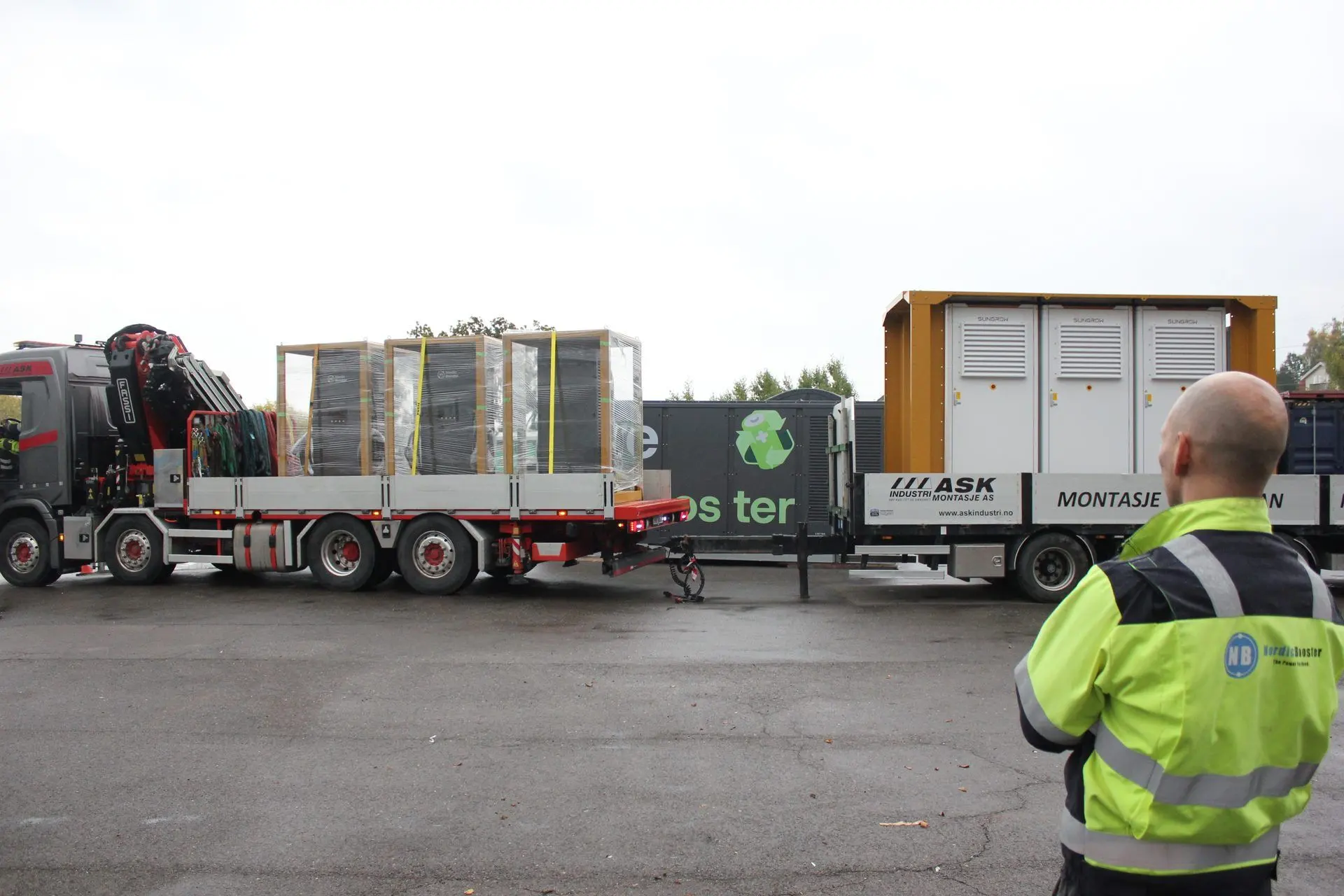
We do the whole job.
From the first conversation until the site is up and running.
We map your needs
What you need, when you need it, and what the grid can give. We fetch the meter data.
We get quotes and apply for funding
We compare the quotes and write the funding application with you. About funding.
We install and train your team
Our own technicians commission the site and show you how to use it.
We handle service and maintenance
Regular service on the chargers and the battery, so the site lasts.
What you choose now is not for ever.
The site grows with you, and we keep an eye on it all the way. How we keep an eye on it.
Tell us about your depot.
Tell us how many vehicles need to go out, and when they are parked. Send us your meter data if you can. You then get a power analysis: your peak, the limit we recommend and what the system costs.