Energy management
The battery works. You don't have to run it.
BoostBridge energy management picks, every hour, what creates the most value: lower grid fees, charging or income from Statnett, the Norwegian grid operator. Automatically.
Are you an electricity supplier? Here is what you get.
The battery always has something to do.
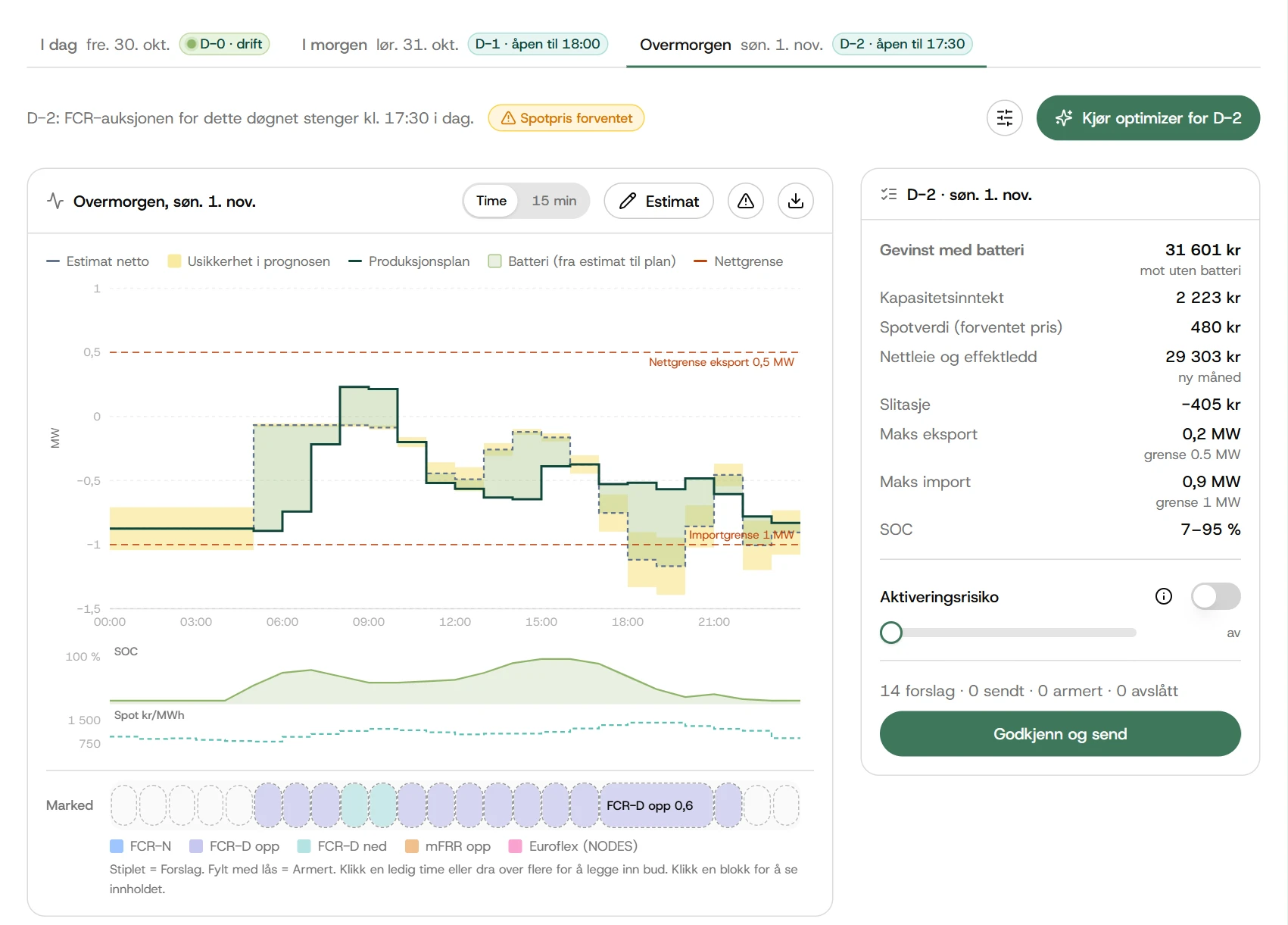
Energy management plans every hour and picks what creates the most value. The plan shows what the battery earns, compared with a site without a battery.
We build the bridge to the market.
Batteries need a market. The market needs power. We put the bridge together, block by block, across electricity suppliers.
Do you own the battery? It earns money without you lifting a finger.
Are you an electricity supplier? Add batteries to your portfolio, without building your own battery control. Talk to us.
- Battery stores the power
- Controller controls on site
- BoostBridge plans and bids
- BSP sells to Statnett
- BRP keeps the balance
- We deliver every block
- Or your own battery
- Or your electricity supplier
From bid to payment.
When the battery is free, we bid it into the reserve markets. We operate and optimise, so you need no trading desk of your own.
We propose
Energy management finds the hours the battery is free, and how much it can bid.
The price is approved
Your electricity supplier sets the price. Or we do it on its behalf.
The bid is sent
The bid reaches Statnett in time. No bids the battery cannot deliver.
The battery delivers
The battery responds in seconds, controlled on site.
You get paid
We show what your site delivered, so the money is shared out correctly.
Statnett approved our control system in 2025, the first on a battery built in Norway.
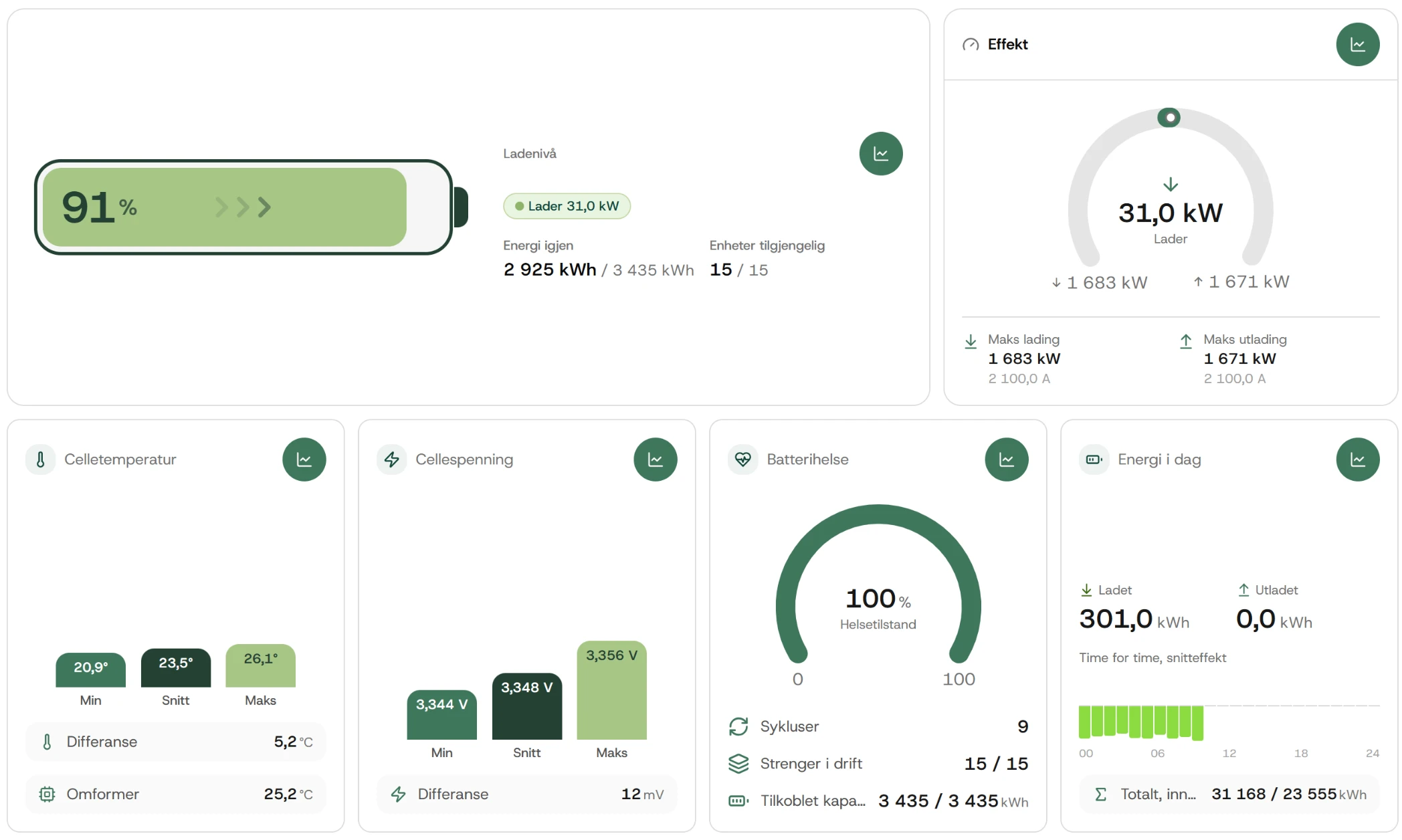
One site or a hundred.
The same energy management runs every site. A new site is set up with data about the equipment, not with new software.
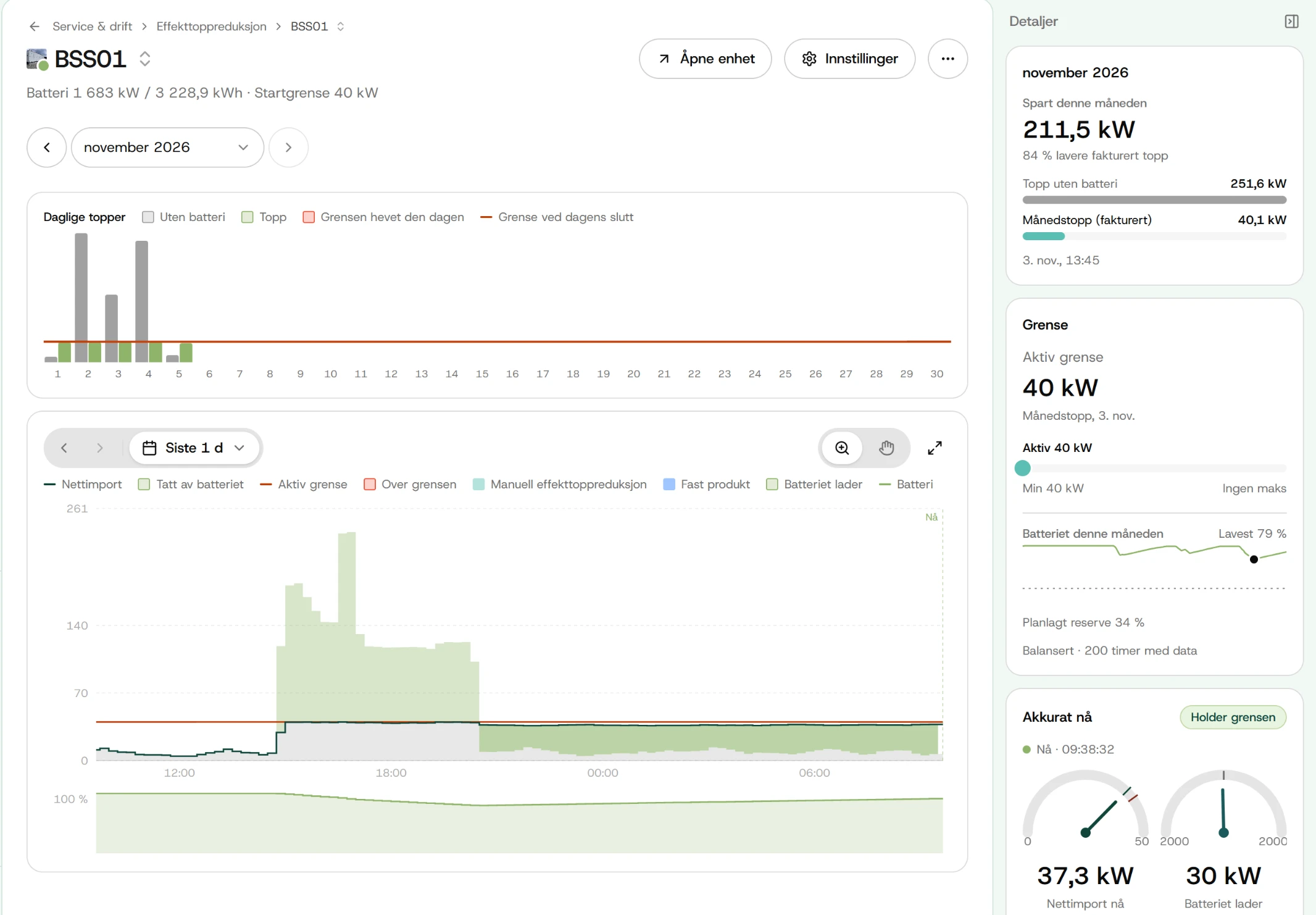
Lower grid fees, fully automatic.
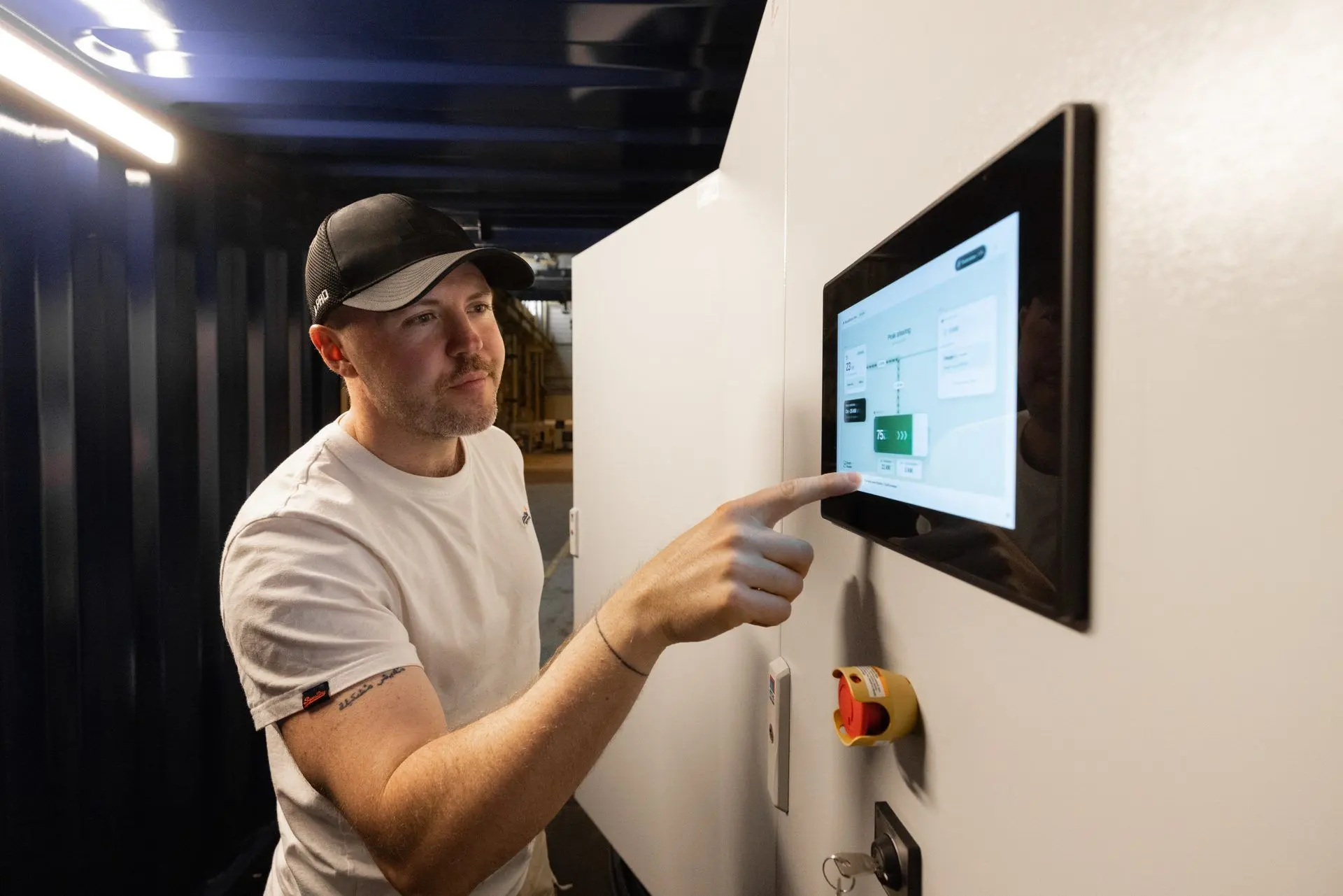
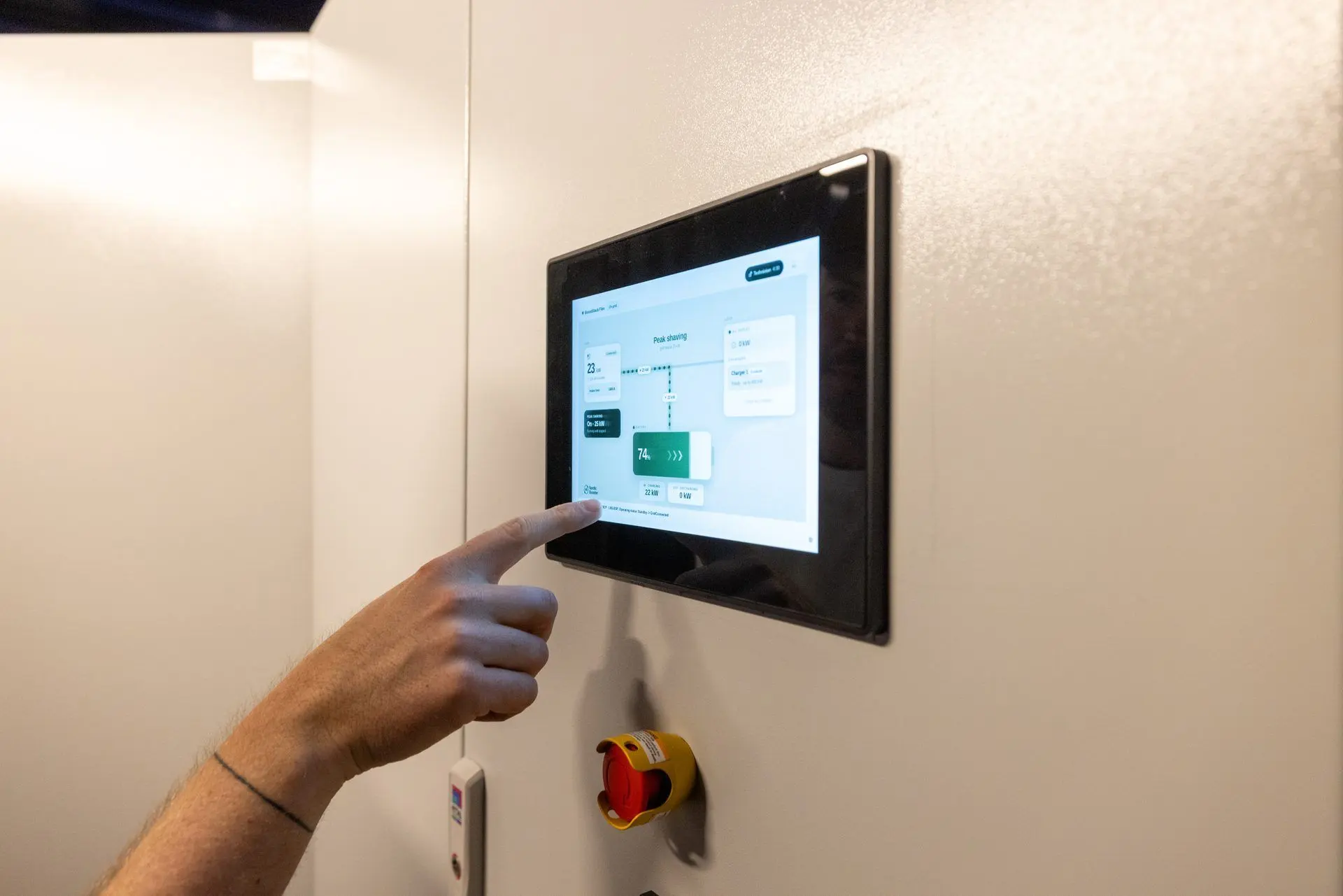
The grid company charges for the highest hour of the month. Energy management covers the peaks with the battery, and works out by itself how low the draw from the grid can go. See how Oslo Buss does it.
The chargers stay within limits. Always.
Energy management controls the chargers too, of any brand. It shares the power between them, so the site never goes above the grid limit, or the peak you have chosen.
On the grid alone
The chargers share what the grid has spare. When the building uses a lot, they charge more slowly.
Together with the battery
The battery supplies what the grid cannot. The vehicles charge at full power, and the peak does not rise.
- The building
- The chargers
- What the chargers would have taken
- From the battery
Questions we often get.
Do we have to do anything ourselves?
No. Energy management runs automatically. If you have a test, a planned outage or an evening with extra load, you put it in the calendar. The rest happens by itself.
What if we need the battery ourselves?
Your own needs always come first. The market only gets the hours the battery is free. If you want to hold back more, for backup for example, we set it up for you.
Who bids the battery into the reserve markets?
Your electricity supplier can bid itself with our tool, we can bid on its behalf, or we can bid ourselves where it fits. We arrange the agreement.
Can you control batteries and chargers we already have?
Often, yes. Energy management is not tied to our equipment. Tell us which brand you have, and we will check.
Tell us about the battery.
Do you have a battery, or are you about to buy one? Tell us where it is and what it should do. We then show you what energy management can get out of it.
Goes well with energy management
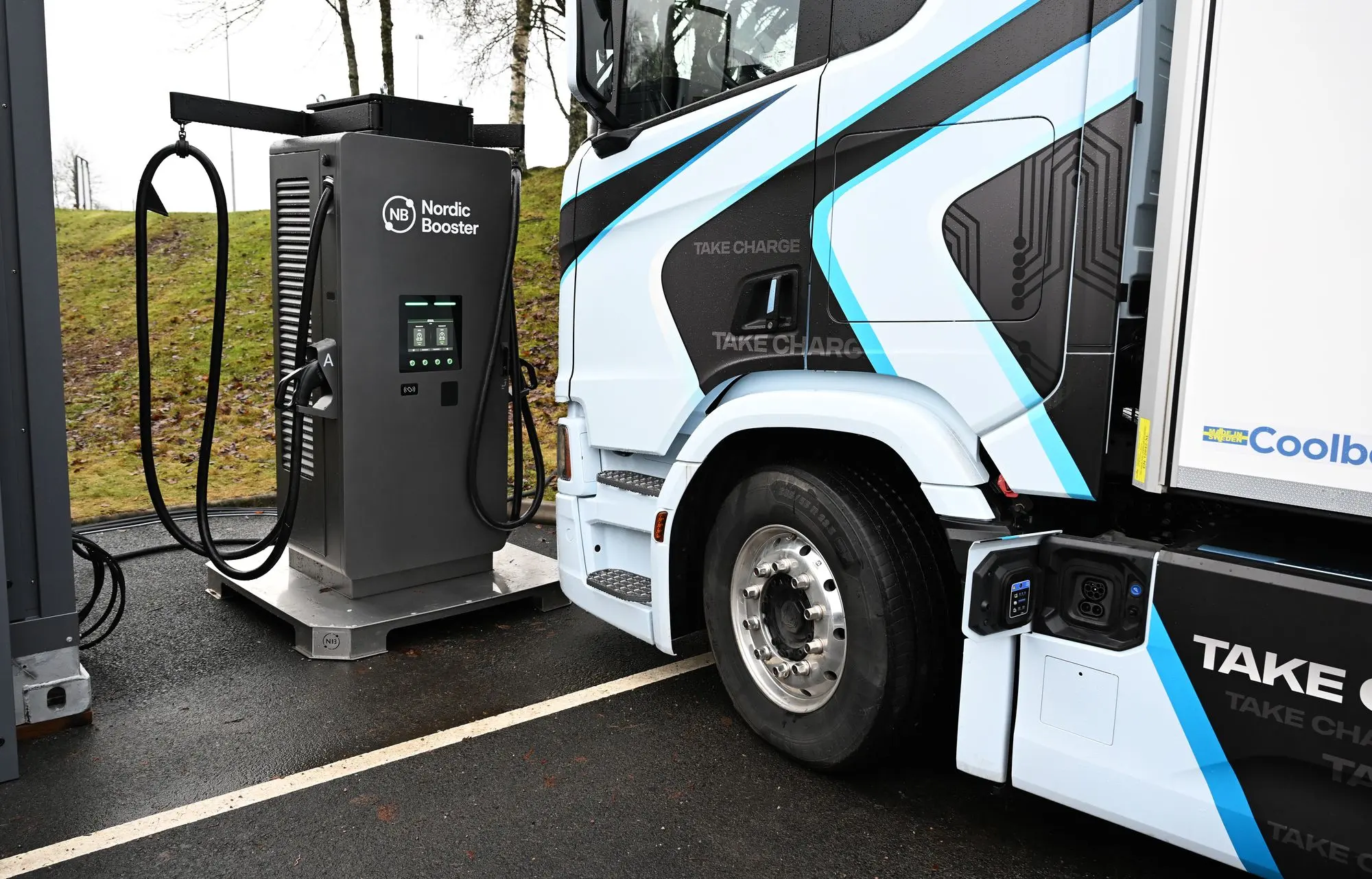
Fast chargers
Fast charging for heavy vehicles.
Stationary fast chargers from 80 to 800 kW, and mobile ones for the construction site.
See the fast chargers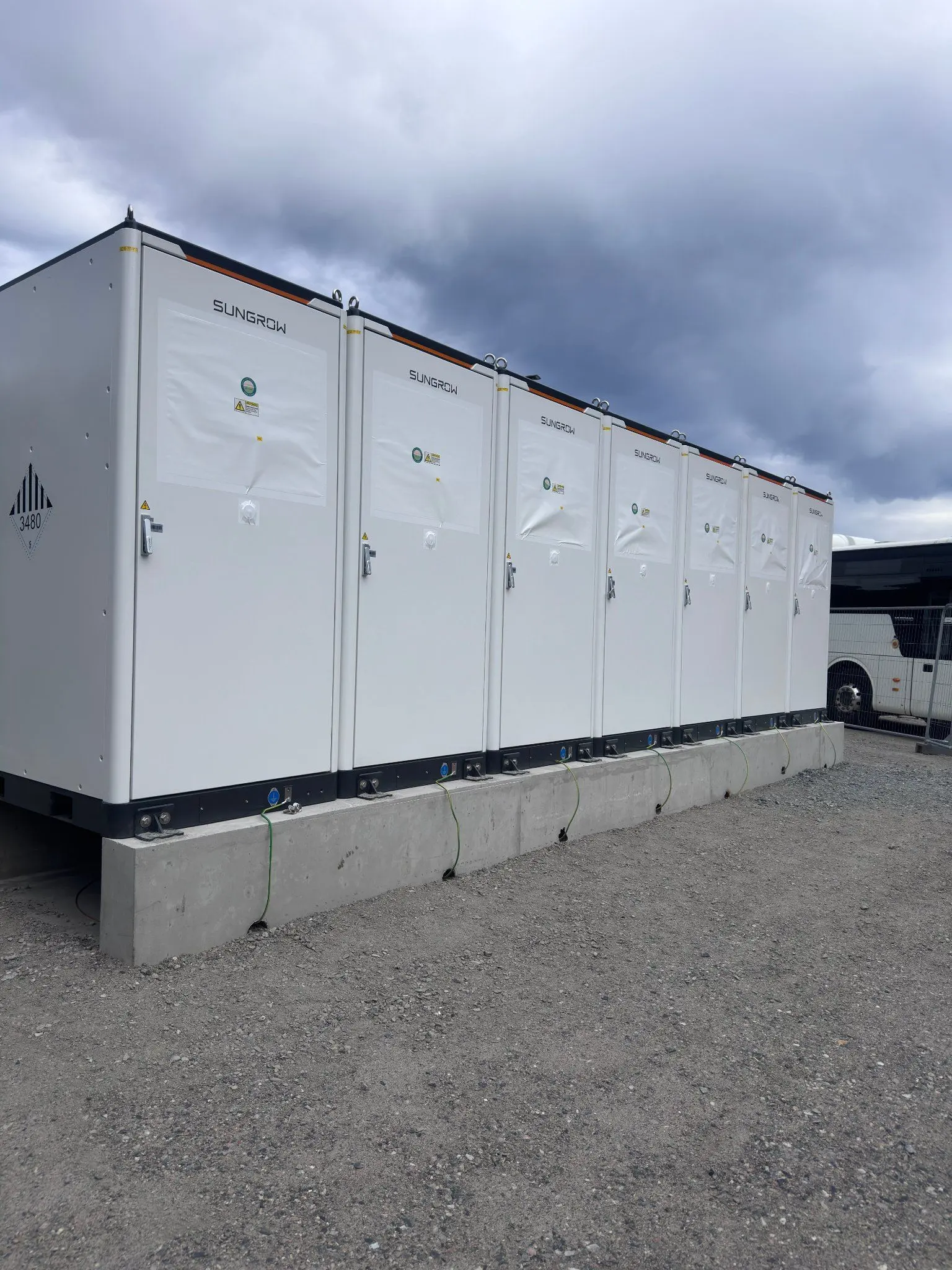
Batteries
Extra power when the grid falls short.
Stationary batteries behind the meter, and movable ones for the construction site.
See the batteries